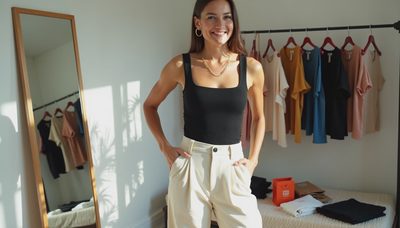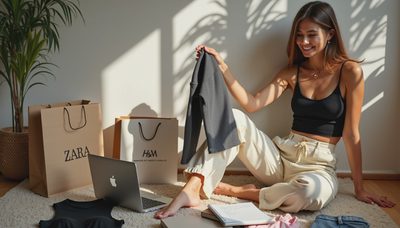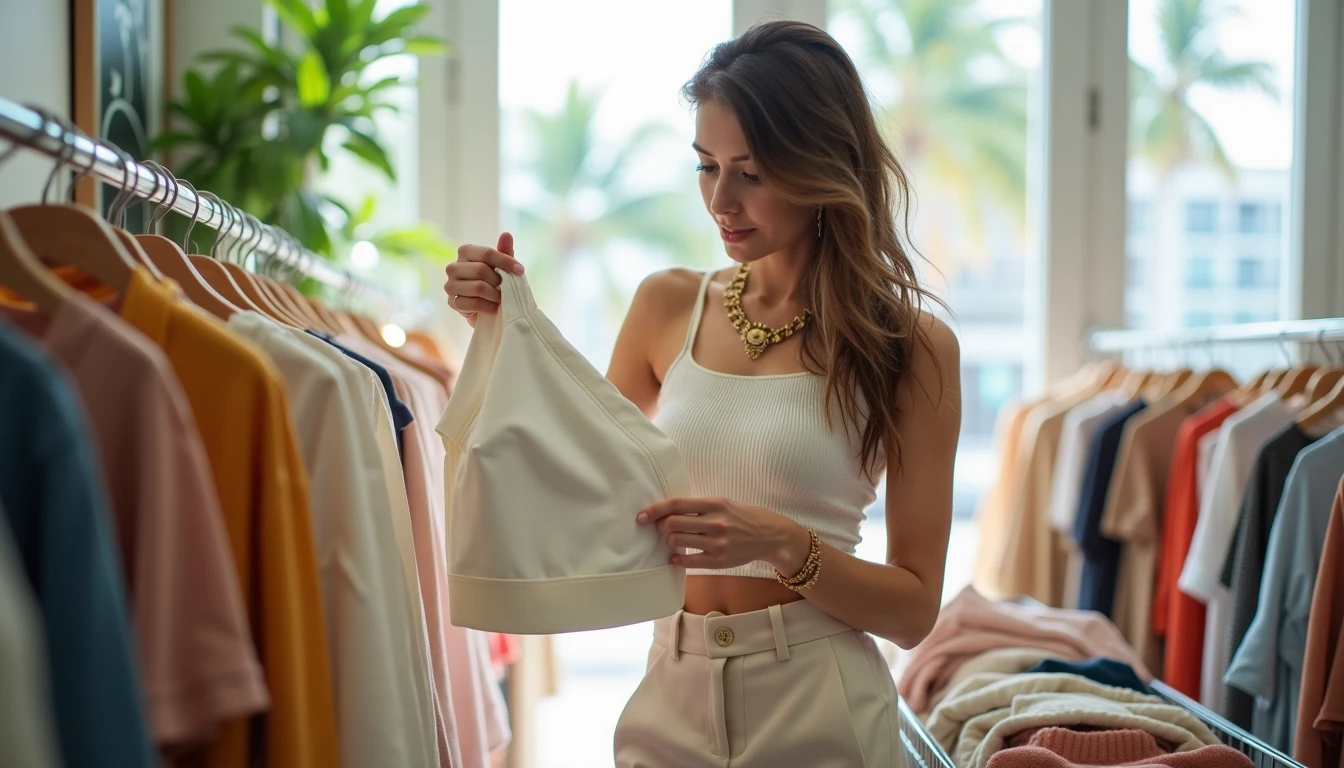
I've wasted more money than I want to think about on clothes that looked cute for approximately one wear. The top that looked chic online but arrived looking like a costume. The trousers that seemed like a steal until they wrinkled if you looked at them wrong. The dress that photographed beautifully on the model and looked like a crumpled napkin on me.
After enough bad purchases, I developed a checklist. Before I buy anything — in store or online — I look for these eight warning signs. If I hit two or more, the piece goes back on the rack.
1. Shiny Polyester That Catches Light the Wrong Way
Not all polyester is bad. But shiny, cheap polyester — the kind that glistens under store lighting like a trash bag — is a dealbreaker.
Good fabric has a soft sheen or a matte finish. Cheap polyester has a harsh, unnatural shine that screams "I cost $6 to manufacture." It also photographs terribly. Instead of looking glossy and luxe, it looks greasy.
The test: Hold the fabric under light and move it slightly. Does it shimmer softly or does it flash a sharp, plastic-like shine? If it's the second one, put it down.
What to look for instead: Matte crepe, brushed polyester blends, viscose, or anything labeled "heavy" or "double-knit." These drape better and don't betray you in photos.
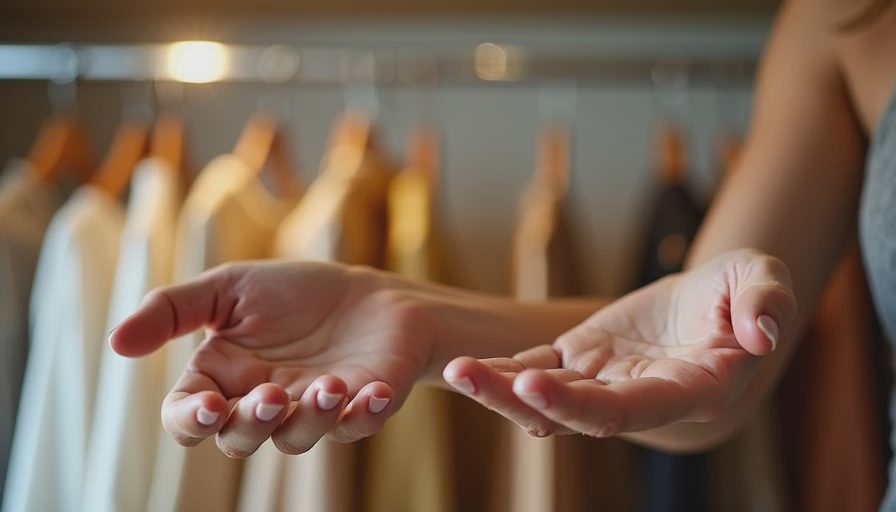
2. Buttons That Feel Hollow and Flimsy
Buttons are one of those details nobody thinks about until they're bad — and then they're all you can see.
Cheap buttons are lightweight, hollow plastic that feel like they'd snap if you sneezed too hard. They often have messy edges, uneven coloring, or a finish that chips off after a few wears. Even worse: buttons sewn on with a single thread that's already coming loose on the rack.
The test: Touch the buttons. Do they have weight? Are they sewn on securely with multiple stitches? Is there an extra button included somewhere on the inside tag? The extra button is a green flag — it means the brand expects the garment to last.
What to look for instead: Buttons made of resin, wood, or thicker plastic with a matte or tortoiseshell finish. Metal buttons should feel solid, not like painted plastic.
3. Zippers That Stick, Warp, or Show
A bad zipper is the fastest way to make an outfit look cheap. It catches on the fabric. It won't zip smoothly. It sits wavy instead of lying flat. It's a completely different color than the fabric and stands out like a scar.
The worst offense: a zipper that's too lightweight for the garment. A flimsy zipper on a pair of structured trousers will warp and ripple the second you sit down. On a fitted dress, it'll create a weird bulge down your back instead of lying invisible.
The test: Zip and unzip it three times. Does it move smoothly? Does it lie flat when zipped? Is the color matched to the fabric? If any answer is no, walk away.
What to look for instead: YKK zippers are the industry standard for a reason. Even on affordable clothes, a YKK zipper is a sign the brand didn't cut corners on what holds the piece together.
4. Lining That's Missing (When It Should Be There)
Not everything needs a lining. But certain pieces absolutely do — and when they don't have one, they look cheap immediately.
White or light-colored pants without lining? Everyone can see your underwear. A structured dress without lining? It clings to your body in all the wrong places. Sheer fabric meant to be worn on its own but sold without a lining? You now have to buy a second piece just to make the first one wearable.
The test: Hold the fabric up to the light or put your hand behind it. Can you see through it? Does it cling and bunch against itself? If yes and there's no lining, factor in the cost of a slip or layer you'll need to wear underneath.
What to look for instead: At minimum, lining in the bodice of structured dresses, the entire length of light-colored pants, and inside any piece made of sheer or lightweight fabric. If the brand invested in lining, they invested in the garment.
5. Seams That Pull, Pucker, or Curve
Seams should be invisible. You shouldn't notice them. But when a seam is badly sewn, it's all you can see.
Warning signs: Puckering along the seam line where the fabric was pulled too tight during sewing. Seams that curve slightly instead of running straight. Loose threads already unraveling on a brand-new piece. Hems that wave instead of lying flat — especially on knit fabrics, which means the hem wasn't properly stabilized.
The test: Run your finger along the seams. Do they lie flat? Hold the garment up and look at the hem from a distance. Is it straight or does it ripple? Check inside seams for raw edges that aren't finished — those will fray after one wash.
What to look for instead: Flat, straight seams with finished edges inside the garment. A clean hem that lies smooth. These are the details that separate clothes that last from clothes that fall apart.
6. Patterns That Don't Match at the Seams
Once you notice this, you can't unsee it. A striped shirt where the stripes don't align at the side seam. A floral dress where the print cuts off and doesn't continue across the zipper. Plaid pants where the pattern is completely different on each leg.
Matching patterns at seams costs more to manufacture, so cheap brands skip it. And it shows. A mismatched pattern instantly signals "this was made as fast and cheap as possible."
The test: Look at the side seams, the back zipper, and where sleeves attach to the body. Do the lines continue? Does the pattern flow across the seam? If not, the garment is cutting corners.
What to look for instead: Pattern matching at major seams. It's a clear signal of quality — even on affordable pieces. Some brands at lower price points do this better than others. Look for it.
7. Thin, Scratchy, or See-Through Fabric
This is different from intentional sheerness. A sheer blouse meant to be layered is one thing. A white t-shirt you can read a label through is another.
Thin fabric looks cheap because it doesn't drape properly. It bunches weirdly. It shows every lump, every seam of your underwear, every texture underneath. Scratchy fabric looks cheap because it doesn't move naturally — it sits stiffly on your body instead of flowing.
The test: The hand test. Scrunch the fabric in your fist and hold it for five seconds, then let go. Does it wrinkle immediately and stay wrinkled? Bad sign. Does it feel rough or stiff against your skin? Also bad. Hold it up to the light — if your hand is clearly visible through a fabric that's supposed to be opaque, it's too thin.
What to look for instead: Fabric with weight. A good white t-shirt has enough density that it drapes, not clings. Knits should be thick enough to hold their shape. Wovens should have enough body to move with you, not against you.
8. Trend Overload — Too Many Trends in One Piece
The fastest way for something to look cheap is for it to look dated three months from now. Pieces that combine multiple aggressive trends at once — a corset top with puff sleeves in a neon color with cutouts — almost always read as fast fashion.
It's not that trends are bad. It's that when a piece is nothing but trend, there's no design intention behind it. It was made to hit a moment, not to look good.
The test: Ask yourself: if this exact item weren't trending right now, would I still like it? If the answer is no, it's going to look cheap fast — because once the trend cycle moves on, all that's left is a piece that doesn't stand on its own.
What to look for instead: One trend element at a time, grounded by classic proportions. A trendy sleeve on an otherwise simple top. A bold color in a timeless silhouette. The trend adds interest; the classic structure keeps it from looking disposable.
The Two-Strike Rule
No piece is perfect, especially not at student-budget prices. The question isn't "does this have any flaws?" It's "how many red flags am I seeing, and can I live with them?"
My rule: if I hit two or more of these warning signs on one piece, I don't buy it. One issue might be manageable — maybe the buttons are mediocre but the fabric is great, and I can swap the buttons later. But two or more problems usually means the whole garment was made cheaply, and the flaws you can see are just the start.
The pieces that last in my closet aren't always the most expensive ones. They're the ones that passed these checks — good fabric, solid hardware, clean construction. Everything else gets donated within six months.
Cheap isn't about the price tag. It's about the corners someone cut to hit that price.
— M 🤍